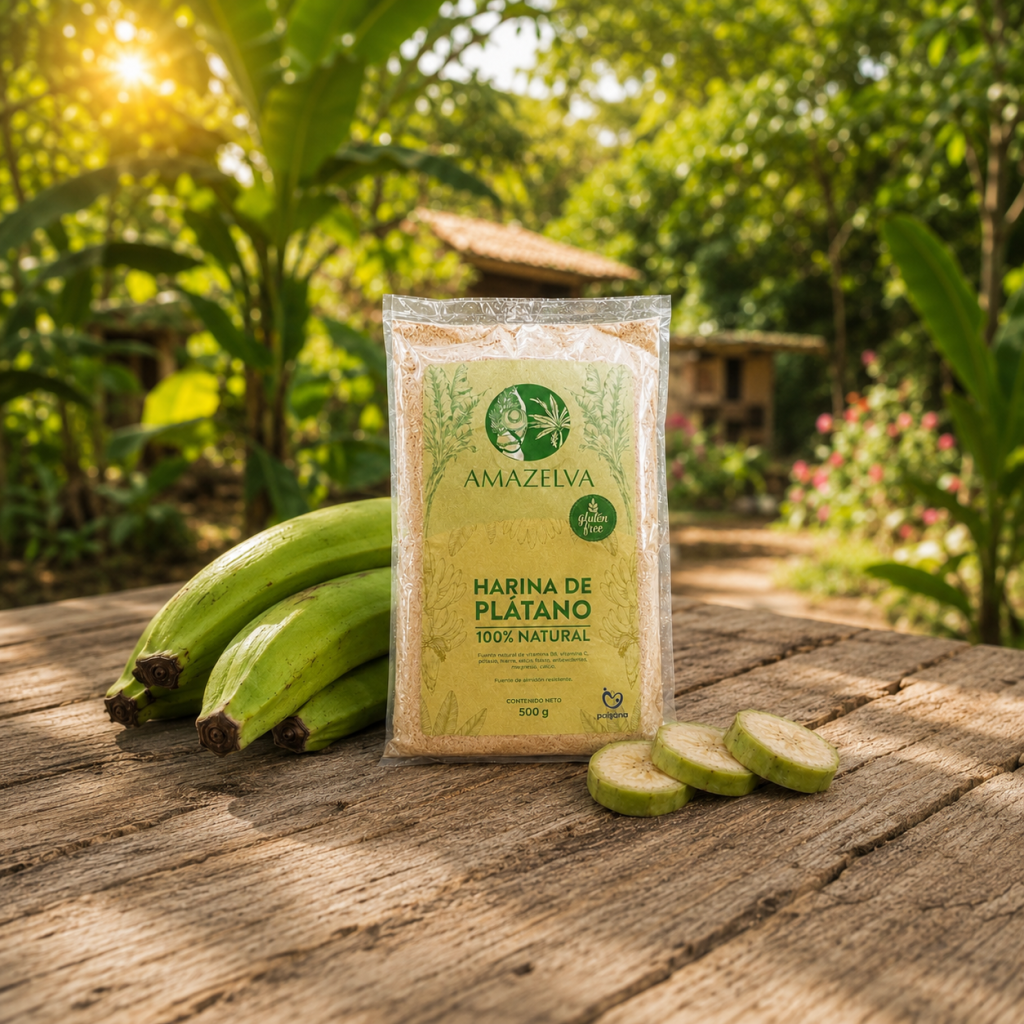
- 2 cups (240 g) AMAZELVA Plantain Flour
- ¾ to 1 cup (180–240 ml) warm water, about 140°F (60°C)
- 1 teaspoon salt
- 1 teaspoon unsalted butter, at room temperature
- 100 g farmer’s cheese or mozzarella, grated or diced
- Vegetable oil or butter for cooking

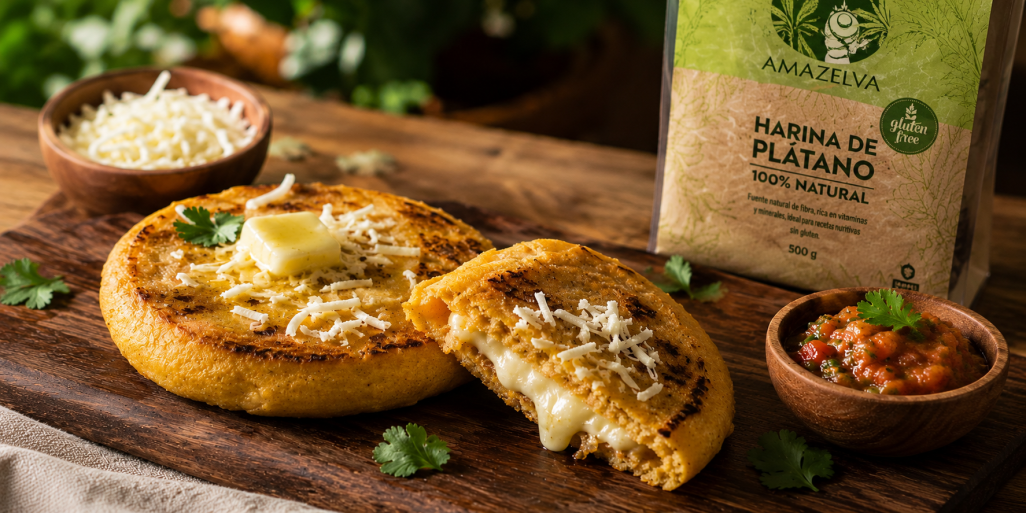
This plantain flour version pays tribute to the traditional arepa while bringing a different flavor and texture to the table. Golden on the outside and soft on the inside, these arepas can be enjoyed plain or filled with melted cheese.
In a large bowl, combine the AMAZELVA Plantain Flour and salt, mixing them together with your fingers.
Add the softened butter and rub it into the flour with your fingertips until it is evenly distributed in small pieces.
Gradually pour in the warm water, starting with ¾ cup and adding more only as needed. Knead by hand for 2 to 3 minutes, until you have a soft, smooth dough.
Plantain flour absorbs liquid quickly, so add the water gradually. The dough is ready when it no longer sticks to your palms and does not crack when gently folded or shaped.
Divide the dough into 6 to 8 equal portions.
For plain arepas: Roll each portion into a ball and flatten it between your palms using gentle circular motions until it is about 3 to 3½ inches (8–9 cm) wide and ½ inch (1–1.5 cm) thick.
For cheese-filled arepas: Shape the dough into a ball, flatten it slightly, and place about 1 tablespoon of cheese in the center. Fold the dough around the cheese and seal the edges completely. Gently flatten it again to the desired thickness.
Heat a cast-iron griddle, comal, or nonstick skillet over medium to medium-high heat. Add about 1 teaspoon of oil or butter and spread it evenly over the surface.
When the fat is hot but not smoking, add the arepas and cook without moving them for 4 to 5 minutes. Lift one slightly with a spatula to check the color; the bottom should be golden and lightly toasted.
Flip with a wide spatula and cook for another 4 to 5 minutes. Continue turning the arepas every few minutes until both sides are evenly golden and the centers are fully cooked.
Chef’s Tip: To check whether an arepa is fully cooked, gently press the center with a folded kitchen towel. It should feel firm rather than soft and doughy.
Add the water gradually. Plantain flour can absorb liquid quickly, and adding too much water at once may make the dough sticky and difficult to shape.
If the edges crack while shaping, lightly moisten your hands and knead the dough for a few more seconds before forming the arepas.
For cheese-filled arepas, make sure the filling is completely enclosed so the cheese does not leak into the skillet while cooking.
Vegan Version: Omit the cheese or use your preferred dairy-free cheese. Replace the butter with coconut oil or another plant-based oil.
Plain Arepas: Skip the filling and serve them warm with avocado, tomato, sautéed vegetables, or your favorite spread.
Herb Variation: Add finely chopped cilantro, chives, or parsley to the dough for extra flavor.
Cheese Variation: Mix a small amount of grated cheese directly into the dough instead of using it only as a filling.
For a Softer Center: Keep the arepas slightly thicker and cook them over medium heat so the center has enough time to cook without overbrowning the outside.
An arepa with the spirit of the jungle: soft inside and golden on the outside.